Springboot 系列:SpringSecurity 认证

在之前的文章中讲述了《SpringSecurity 整体架构》,这篇文章承接上篇文章,主要讲述 SpringSecurity 的认证流程及相关的类。

整体流程

我们以之前文章的代码来分析认证的整体流程,关键步骤如下所示: Authentication-flow
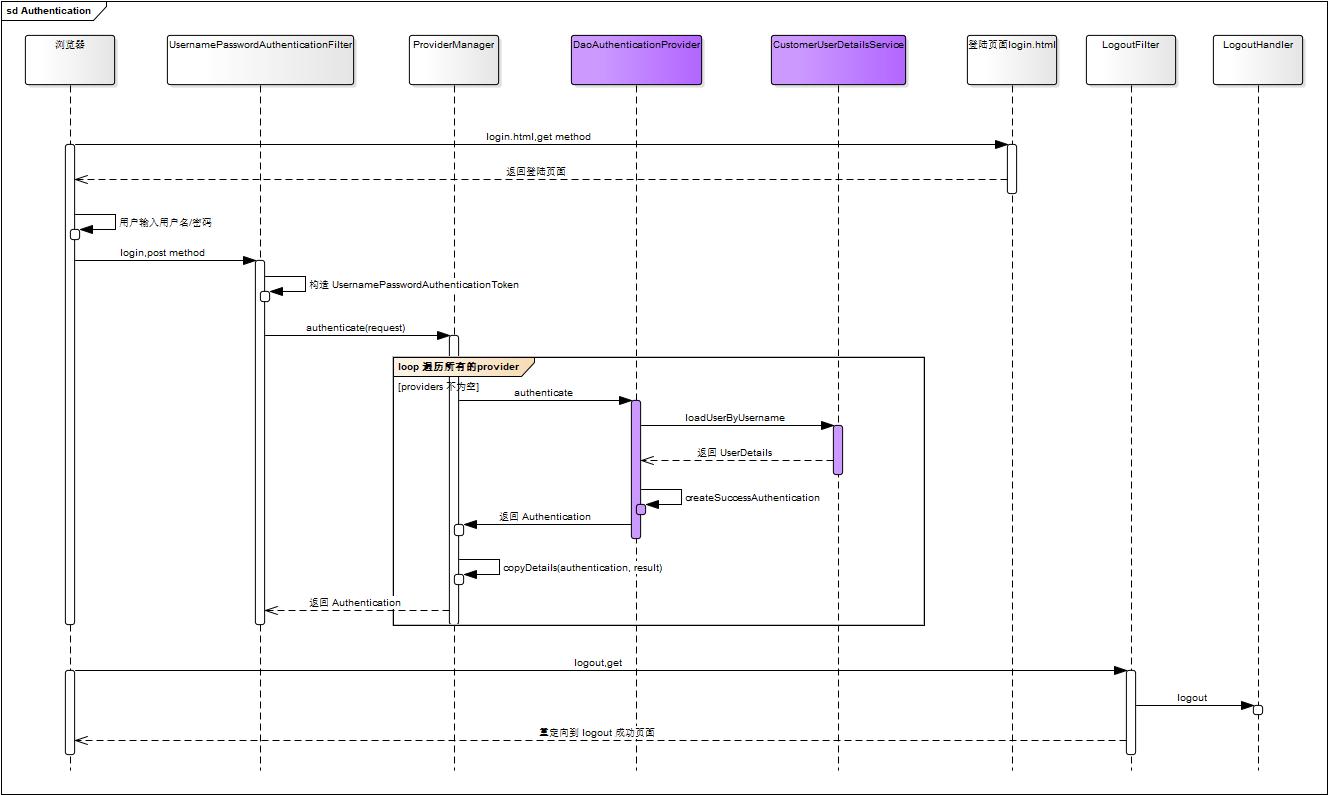
登陆主要流程:

  1. 用户首先打开登陆页面,页面的 endpoint 为 login.html, Method: GET, 该页面直接放行,返回给浏览器渲染展现;
  2. 用户输入用户名/密码,执行登陆操作,endpoint 为 login, Method: POST, 而 login 是我们指定的登陆处理 endpoint;
  3. login, Method: POST 请求被 UsernamePasswordAuthenticationFilter 拦截,读取参数构造请求对象 UsernamePasswordAuthenticationToken;
  4. 将 UsernamePasswordAuthenticationToken 对象传递给 AuthenticationManager 进行认证,获取 Authentication 对象;
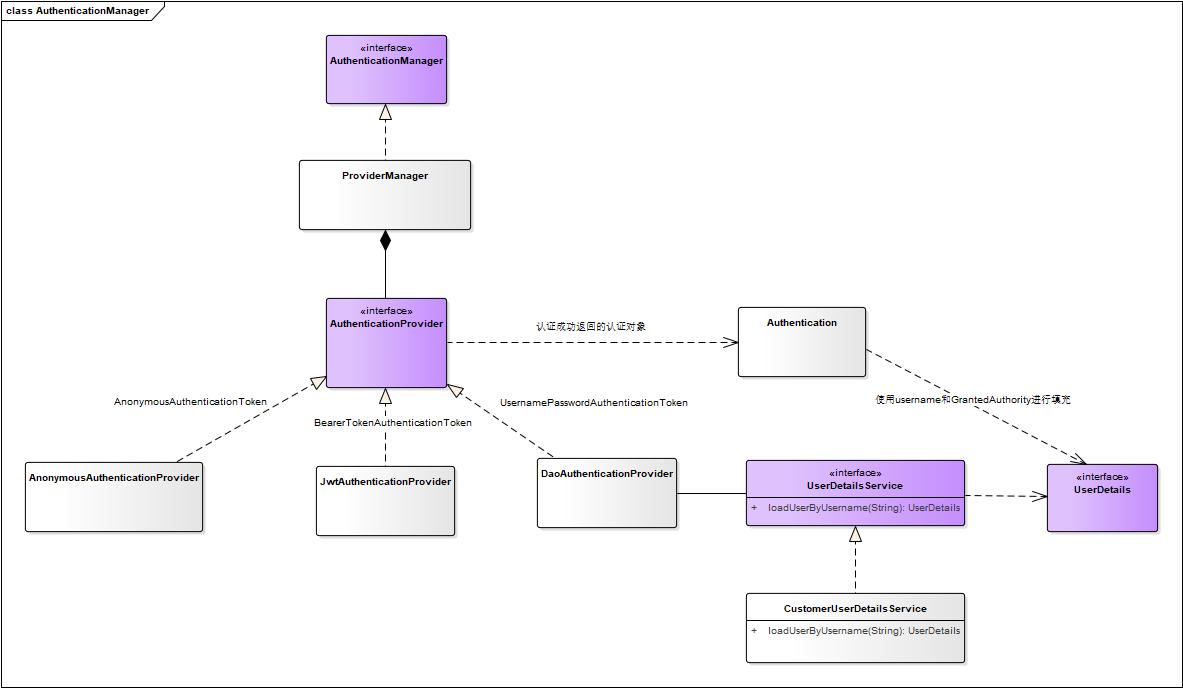
  5. AuthenticationManager 是一个接口,在这里使用的是其实现类 ProviderManager, ProviderManager 对象中包含有一组 AuthenticationProvider, 每一个 AuthenticationProvider 代表了一类认证场景,我们可以根据需求自定义 AuthenticationProvider 类实现我们的业务;
  6. AuthenticationProvider 的主要功能是将查询用户 UserDetails 对象并将其映射为 Authentication 对象,而每一个 AuthenticationProvider 对象只会针对特定的请求对象进行处理,在这里,由于我们的请求对象是 UsernamePasswordAuthenticationToken, 对应地, AuthenticationProvider 的实现类使用的是 DaoAuthenticationProvider;
  7. DaoAuthenticationProvider 需要获用户的信息,是通过 UserDetailsService 接口来实现的,在这里,我们自定义了 CustomerUserDetailsService 对象,实现从数据库中获取用户信息 UserDetails 对象,而 UserDetails 也是一个接口,需要我们自定义实现;
  8. 在 DaoAuthenticationProvider 中获取用户信息 UserDetails 对象,需要将其转化为 Authentication 对象;
  9. ProviderManager 对象中获取到 Authentication 对象之后,进行复制操作之后,返回给 UsernamePasswordAuthenticationFilter 对象。这个 Authentication 对象持有用户的账号及权限信息,在后期的授权操作中会被用到。

登出主要流程:

  1. 登出的 endpoint 为 logout, Method: GET, 该 endpoint 被 LogoutFilter 拦截;
  2. 在 LogoutFilter 中,登出的业务逻辑封装在 LogoutHandler 对象中,会执行会话的清理操作;
  3. 操作成功之后再跳转到登出成功页面。

认证相关的类

AuthenticationManager
  • AuthenticationManager: 认证的核心接口,输入为用户请求对象,如 UsernamePasswordAuthenticationToken,输出为认证对象 Authentication;
  • ProviderManager: AuthenticationManager 接口实现类,它包含一组 AuthenticationProvider 对象,而每一个 AuthenticationProvider 代表了一类认证场景,它对应只会处理对应的请求对象;
  • DaoAuthenticationProvider: AuthenticationProvider 接口实现类,主要功能是从 UserDetailsService 接口获取用户对象 UserDetails, 将转换为 Authentication 对象;
  • UserDetailsService:用户查询接口,根据用户名查询用户信息;
  • CustomerUserDetailsService:UserDetailsService 实现类,从数据库中获取用户信息;
  • UserDetails: 用户信息接口,包括了获取用户名及权限的方法;
  • Authentication: 认证对象对象;

用户模型

UserDetails

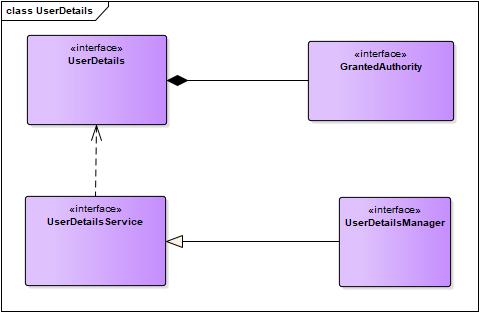
在 SpringSecurity 中,定义了 UserDetails 及 Authentication 接口,用于存储用户及认证数据。通过 UserDetails 接口,业务系统可以将用户信息传递给 SpringSecurity, 然后封装成 Authentication, 供后续功能使用。

UserDeails 接口

1
2
3
4
5
6
7
8
9
10
11
12
13
14
15
16
17
18
19
20
21
22
23
24
25
26
27
28
29
30
31
32
33
34
35
36
37
38
39
40
41
42
43
44
45
46
47
48
49
50
51
52
53
public interface UserDetails extends Serializable {

/**
* 获取权限列表
*
* @return 权限列表
*/
Collection<? extends GrantedAuthority> getAuthorities();

/**
* 获取用户密码
*
* @return the password
*/
String getPassword();

/**
* 获取用户名
*
* @return the username (never <code>null</code>)
*/
String getUsername();

/**
* 判断用户是否过期
*
* @return <code>true</code> if the user's account is valid (ie non-expired),
* <code>false</code> if no longer valid (ie expired)
*/
boolean isAccountNonExpired();

/**
* 判断用户是否被锁定
*
* @return <code>true</code> if the user is not locked, <code>false</code> otherwise
*/
boolean isAccountNonLocked();

/**
* 判断密码是否过期
*
* @return <code>true</code> if the user's credentials are valid (ie non-expired),
* <code>false</code> if no longer valid (ie expired)
*/
boolean isCredentialsNonExpired();

/**
* 判断密码是否可用
*
* @return <code>true</code> if the user is enabled, <code>false</code> otherwise
*/
boolean isEnabled();
}

UserDetails 提供了访问用户名称、状态及权限相关的方法,上层业务需要实现自己的 UserDetails 类,如下所示:

1
2
3
4
5
6
7
8
9
10
11
12
13
14
15
16
17
18
19
20
21
22
23
24
25
26
27
28
29
30
31
32
33
34
35
36
37
38
39
40
41
42
43
44
45
46
public class User implements UserDetails, Serializable {

private Long id;
private String username;
private String password;

private List<Role> authorities;

public Long getId() {
return id;
}

public void setId(Long id) {
this.id = id;
}

@Override
public String getUsername() {
return username;
}

public void setUsername(String username) {
this.username = username;
}

@Override
public String getPassword() {
return password;
}

public void setPassword(String password) {
this.password = password;
}

@Override
public List<Role> getAuthorities() {
return authorities;
}

public void setAuthorities(List<Role> authorities) {
this.authorities = authorities;
}

// ...

}

UserDetails 接口会包含一组权限,SpringSecurity 也定义了权限接口,如下所示:

1
2
3
4
5
6
7
8
9
10
public interface GrantedAuthority extends Serializable {


/**
* 获取权限
*
* @return 权限
*/
String getAuthority();
}

在 GrantedAuthority 接口中,只是简单定义了返回权限名称的方法,业务上层可以进行扩展,用户的角色也包含在权限表中,使用 ROLE_ 前缀来区分。

Authentication 接口

Authentication 接口存储认证成功的信息,它由 UserDetails 封装转换而来。

1
2
3
4
5
6
7
8
9
10
11
12
13
14
15
16
17
18
19
20
21
22
23
24
25
26
27
28
29
30
31
32
33
34
35
36
37
38
39
40
41
public interface Authentication extends Principal, Serializable {

/**
* 获取权限
*
* @return 权限列表
*/
Collection<? extends GrantedAuthority> getAuthorities();

/**
* 密码
* @return 密码
*/
Object getCredentials();

/**
* 获取请求对象相关的信息,如ip
*
* @return 详情对象
*/
Object getDetails();

/**
* 获取用户信息
*
* @return 用户信息
*/
Object getPrincipal();

/**
* 用户是否已经认证通过

* @return trur/false
*/
boolean isAuthenticated();

/**
* 设置认证结果
*/
void setAuthenticated(boolean isAuthenticated) throws IllegalArgumentException;
}

在 Authentication 中,将 Principal 定义为用户信息,Credentials 为密码信息,GrantedAuthority 为权限信息,另外还保存了请求对象详情信息。这些信息从 UserDetails, UsernamePasswordAuthenticationToken 中获取到。

1
2
3
4
5
6
7
8
9
10
11
12
13
14
15
16
17
18
19
20
21
22
23
24
25
26
27
28
29
30
31
32
33
34
35
36
37
38
39
public Authentication authenticate(Authentication authentication)
throws AuthenticationException {
Assert.isInstanceOf(UsernamePasswordAuthenticationToken.class, authentication,
() -> messages.getMessage(
"AbstractUserDetailsAuthenticationProvider.onlySupports",
"Only UsernamePasswordAuthenticationToken is supported"));

// Determine username
String username = (authentication.getPrincipal() == null) ? "NONE_PROVIDED"
: authentication.getName();

boolean cacheWasUsed = true;
UserDetails user = this.getUserDetailsService().loadUserByUsername(username);;

// ...

Object principalToReturn = user;

if (forcePrincipalAsString) {
principalToReturn = user.getUsername();
}

return createSuccessAuthentication(principalToReturn, authentication, user);
}

protected Authentication createSuccessAuthentication(Object principal,
Authentication authentication, UserDetails user) {
// Ensure we return the original credentials the user supplied,
// so subsequent attempts are successful even with encoded passwords.
// Also ensure we return the original getDetails(), so that future
// authentication events after cache expiry contain the details
UsernamePasswordAuthenticationToken result = new UsernamePasswordAuthenticationToken(
principal, authentication.getCredentials(),
authoritiesMapper.mapAuthorities(user.getAuthorities()));
result.setDetails(authentication.getDetails());

return result;
}

通过代码可知:

  • UserDetails ---> principal
  • UserDetails.getAuthorities() ---> list of GrantedAuthority
  • requestAuthentication.getCredentials() ---> credentials
  • requestAuthentication..getDetails() ---> details

默认设置

Endpoints SpringSecurity 内置登陆/登出相关的 Endpoint, 用户不做任何配置即可使用,这些 Endpoint 包括:

  1. /login,GET: 登陆页面,默认由 DefaultLoginPageGeneratingFilter 对象生成;
  2. /login,POST: 对用户进行认证, 传入参数 usernamepassword 生成 UsernamePasswordAuthenticationToken, 这两个参数名称可以修改;
  3. /login?error: 登陆出错页面;
  4. /login?logout: 成功登陆退出后跳转的页面。

默认参数 在登陆页面表单中需要配置用户名称及密码,它们的默认名称如下:

  1. username: 用户名称;
  2. password: 用户密码。

这些默认配置都可以在 FormLoginConfigurer 中配置:

1
2
3
4
5
6
FormLoginConfigurer
.usernameParameter("username")
.passwordParameter("password")
.loginPage("/authentication/login")
.failureUrl("/authentication/login?failed")
.loginProcessingUrl("/authentication/login/process")


参考:


1. 03 认证体系:如何深入理解 Spring Security 用户认证机制?

2. 02 用户认证:如何使用 Spring Security 构建用户认证体系?