Spring Security 授权的本质是根据请求的 URL
找到匹配的权限规则列表,进行投票决定是否放行。本文将讲述这一过程,并分析底层的数据结构。
整体流程
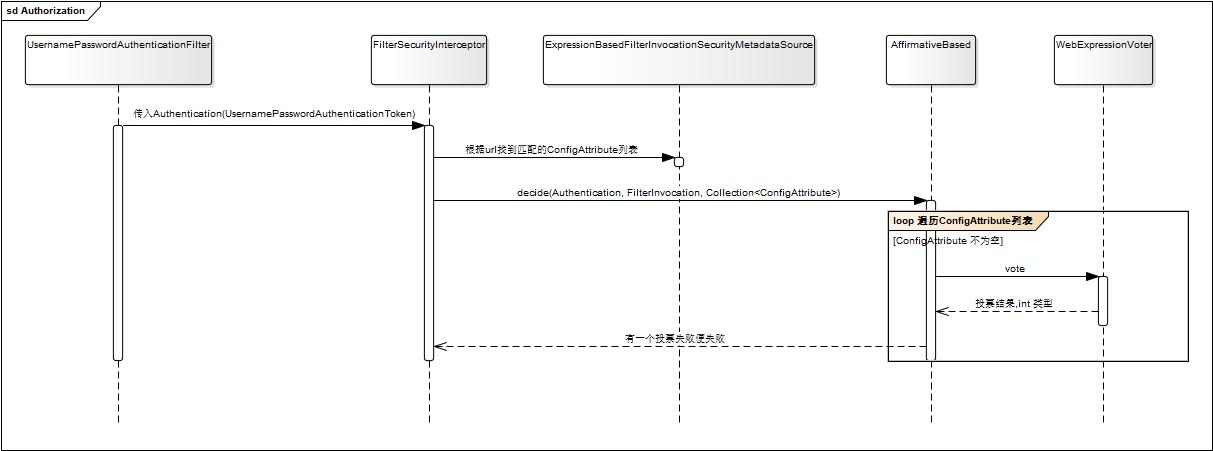
Authorization
授权流程如下:
用户认证成功之后,会绑定一个 Authentication 对象,一般是
UsernamePasswordAuthenticationToken 对象;
请求被 FilterSecurityInterceptor 拦截,并根据请求的 URL 从
ExpressionBasedFilterInvocationSecurityMetadataSource 中获取匹配的一组
ConfigAttribute 列表;
ConfigAttribute 列表代表了一组权限规则,由用户自定义指定的,如
permitAll, authenticated, denyAll
等等;
将请求操作封装为 FilterInvocation, 并将它作为参数,连同
Authentication, ConfigAttribute 列表传递给 AccessDecisionManager
接口,由该接口决策是否放行;
AccessDecisionManager 接口的实现类是 AffirmativeBased,
在该类中,会持有多个 Voter, 每一个 Voter
都可以对权限规则列表进行投票,只要一个失败便失败;
在这里,Voter 使用的是 WebExpressionVoter, 它使用 SpEL (Spring
表达式语言) 进行逻辑判断。
相关类
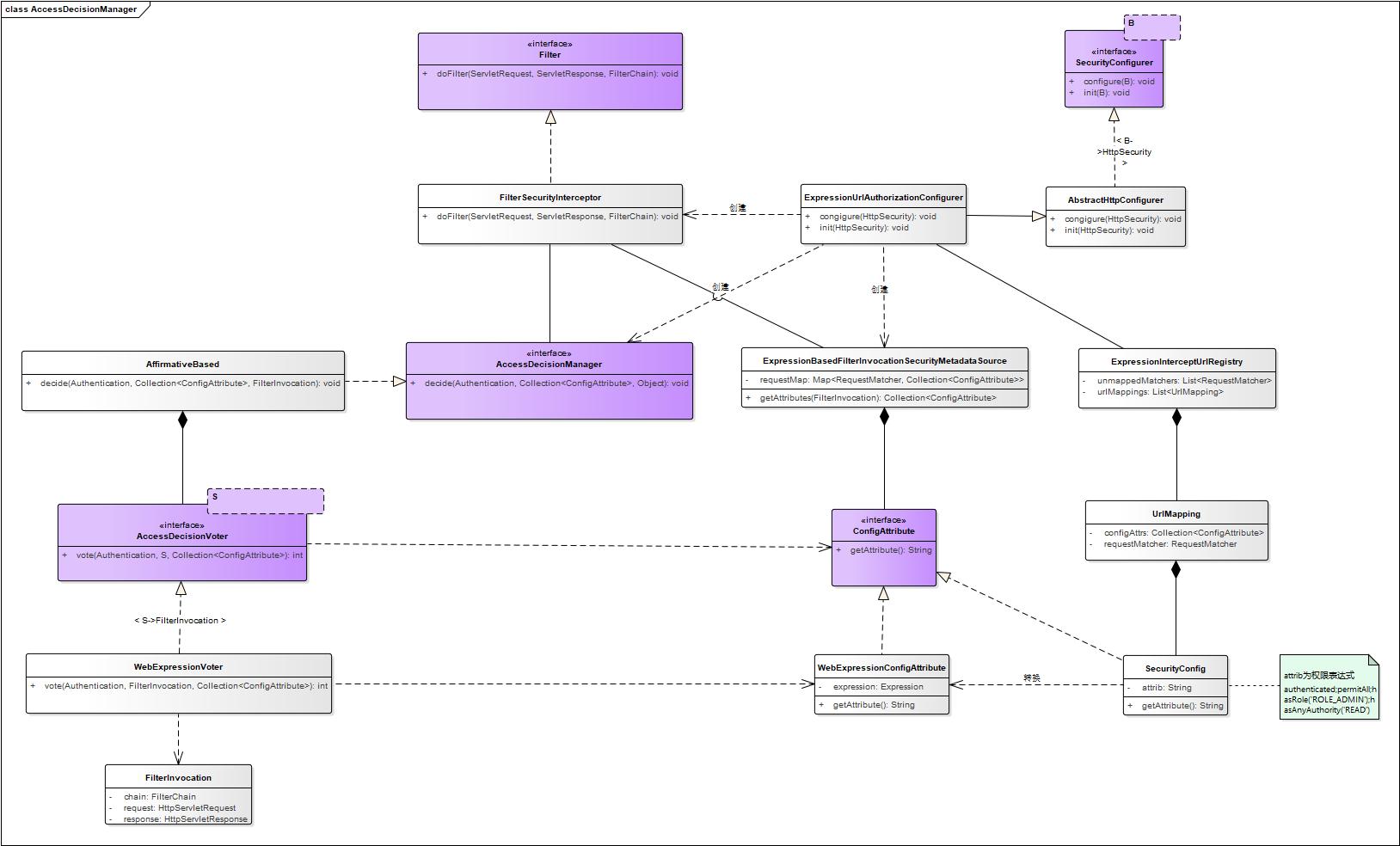
在上文的整体流程中,涉及到一些数据结构,如 ConfigAttribute
列表。这是怎么产生的?这个章节将会详细讲到。我们先看一个整体的类图,然后再结合一个实例分析。
关键类:
ExpressionUrlAuthorizationConfigurer:
授权操作的配置类,这会对创建和初始化相关的类,如上文提到的
FilterSecurityInterceptor,
AccessDecisionManager,ExpressionBasedFilterInvocationSecurityMetadataSource;
FilterSecurityInterceptor:
授权过滤器,这会拦截所有的请求,进行权限判断,这是授权操作的入口;
AccessDecisionManager:
它是授权判断的关键类,是否可以访问由它来决策;
ExpressionBasedFilterInvocationSecurityMetadataSource:存储权限规则列表,每一个请求都会对应一个权限规则列表;
ExpressionInterceptUrlRegistry:
存储用户配置的权限规则列表,ExpressionBasedFilterInvocationSecurityMetadataSource
中的数据便是由该类转化映射而来,或者说该类存储了最原始的规则列表。
ConfigAttribute:配置属性接口,存储了权限规则的内容;
SecurityConfig:ConfigAttribute 实现类,它只是简单将权限规则存储为
String 类型;
WebExpressionConfigAttribute:表达式类型的 ConfigAttribute
实现类,可以使用 SpEL 表达式来判断是否有权限,它由 SecurityConfig
对象转化而来;
实例
以下面的配置为例,配置两个规则,/admin/** 请求需要
ADMIN
角色才能访问,其它的请求只要登陆便可访问。我们来分析它是生成什么样的
ConfigAttribute 列表;
1
2
3
http.authorizeRequests() .antMatchers("/admin/**" ).hasRole("ADMIN" ) .anyRequest().authenticated()
引入配置类
调用 http.authorizeRequests() 方法后,便向 HttpSecurity
对象中加入了 ExpressionUrlAuthorizationConfigurer,
它会完成授权相关类的创建及初始化。
1
2
3
4
5
6
public ExpressionUrlAuthorizationConfigurer<HttpSecurity>.ExpressionInterceptUrlRegistry authorizeRequests () throws Exception { ApplicationContext context = getContext(); return getOrApply(new ExpressionUrlAuthorizationConfigurer <>(context)) .getRegistry(); }
生成 SecurityConfig 对象
跟踪代码可知, antMatchers("/admin/**") 方法会生成一个
AuthorizedUrl 对象, 并将 /admin/** 转化一个
AntPathRequestMatcher 对象。hasRole("ADMIN")
方法首先会转化成 hasRole('ROLE_ADMIN') 字符串,然后生成
SecurityConfig 对象,最终转化为一个 UrlMapping 对象存储到
ExpressionInterceptUrlRegistry 对象中。
1 2 3 4 5 6 7 8 9 10 11 12 13 14 15 16 17 18 19 20 21 22 23 24 25 26 27 28 29 30 31 private static String hasRole (String role) { Assert.notNull(role, "role cannot be null" ); if (role.startsWith("ROLE_" )) { throw new IllegalArgumentException ( "role should not start with 'ROLE_' since it is automatically inserted. Got '" + role + "'" ); } return "hasRole('ROLE_" + role + "')" ; } public ExpressionInterceptUrlRegistry access (String attribute) { if (not) { attribute = "!" + attribute; } interceptUrl(requestMatchers, SecurityConfig.createList(attribute)); return ExpressionUrlAuthorizationConfigurer.this .REGISTRY; } private void interceptUrl (Iterable<? extends RequestMatcher> requestMatchers, Collection<ConfigAttribute> configAttributes) { for (RequestMatcher requestMatcher : requestMatchers) { REGISTRY.addMapping(new AbstractConfigAttributeRequestMatcherRegistry .UrlMapping( requestMatcher, configAttributes)); } }
由此可知,我们知道有如下的转化关系:
/admin/** ---> AntPathRequestMatcher
hasRole("ADMIN") ---> hasRole('ROLE_ADMIN') --->
SecurityConfig
antMatchers("/admin/**").hasRole("ADMIN") ---> UrlMapping
我们来看下 ConfigAttribute, SecurityConfig,
UrlMapping 的结构:
1
2
3
4
5
6
7
8
9
10
11
12
13
14
15
16
17
18
19
20
21
22
23
24
25
26
27
28
29
30
31
32
33
34
35
36
37
38
public interface ConfigAttribute extends Serializable { String getAttribute () ; } public class SecurityConfig implements ConfigAttribute { private final String attrib; @Override public String getAttribute () { return this .attrib; } public static List<ConfigAttribute> createList (String... attributeNames) { Assert.notNull(attributeNames, "You must supply an array of attribute names" ); List<ConfigAttribute> attributes = new ArrayList <>( attributeNames.length); for (String attribute : attributeNames) { attributes.add(new SecurityConfig (attribute.trim())); } return attributes; } } static final class UrlMapping { private RequestMatcher requestMatcher; private Collection<ConfigAttribute> configAttrs; }
UrlMapping 是一个数据存储类,它将
antMatchers("/admin/**").hasRole("ADMIN") 相关的数据封装在
UrlMapping 中,并最终存储到 ExpressionInterceptUrlRegistry 中。
1
2
3
4
5
6
7
8
9
10
11
12
public abstract class AbstractConfigAttributeRequestMatcherRegistry <C> extends AbstractRequestMatcherRegistry <C> { private List<UrlMapping> urlMappings = new ArrayList <>(); private List<RequestMatcher> unmappedMatchers; final void addMapping (UrlMapping urlMapping) { this .unmappedMatchers = null ; this .urlMappings.add(urlMapping); } }
转化为
WebExpressionConfigAttribute 对象
将权限配置转化为 UrlMapping 并存储到 ExpressionInterceptUrlRegistry
中之后,在 FilterSecurityInterceptor 中并不能直接使用它,而是将它转化为
WebExpressionConfigAttribute 对象。
1
2
3
4
5
6
7
8
9
10
11
final ExpressionBasedFilterInvocationSecurityMetadataSource createMetadataSource ( H http) { LinkedHashMap<RequestMatcher, Collection<ConfigAttribute>> requestMap = REGISTRY .createRequestMap(); if (requestMap.isEmpty()) { throw new IllegalStateException ( "At least one mapping is required (i.e. authorizeRequests().anyRequest().authenticated())" ); } return new ExpressionBasedFilterInvocationSecurityMetadataSource (requestMap, getExpressionHandler(http)); }
首先它将 ExpressionInterceptUrlRegistry 中的
List<UrlMapping> 转化为
LinkedHashMap<RequestMatcher, Collection<ConfigAttribute>>,
然后再将 SecurityConfig 转化为 WebExpressionConfigAttribute.
1
2
3
4
5
6
7
8
9
10
11
12
13
14
15
16
17
18
19
20
21
22
23
24
25
26
27
28
29
30
31
32
33
34
35
36
37
38
39
40
41
42
43
44
45
46
47
48
49
public final class ExpressionBasedFilterInvocationSecurityMetadataSource extends DefaultFilterInvocationSecurityMetadataSource { private final Map<RequestMatcher, Collection<ConfigAttribute>> requestMap; public ExpressionBasedFilterInvocationSecurityMetadataSource ( LinkedHashMap<RequestMatcher, Collection<ConfigAttribute>> requestMap, SecurityExpressionHandler<FilterInvocation> expressionHandler) { requestMap = processMap(requestMap, expressionHandler.getExpressionParser()); } private static LinkedHashMap<RequestMatcher, Collection<ConfigAttribute>> processMap ( LinkedHashMap<RequestMatcher, Collection<ConfigAttribute>> requestMap, ExpressionParser parser) { Assert.notNull(parser, "SecurityExpressionHandler returned a null parser object" ); LinkedHashMap<RequestMatcher, Collection<ConfigAttribute>> requestToExpressionAttributesMap = new LinkedHashMap <RequestMatcher, Collection<ConfigAttribute>>( requestMap); for (Map.Entry<RequestMatcher, Collection<ConfigAttribute>> entry : requestMap .entrySet()) { RequestMatcher request = entry.getKey(); ArrayList<ConfigAttribute> attributes = new ArrayList <>(1 ); String expression = entry.getValue().toArray(new ConfigAttribute [1 ])[0 ] .getAttribute(); AbstractVariableEvaluationContextPostProcessor postProcessor = createPostProcessor( request); try { attributes.add(new WebExpressionConfigAttribute ( parser.parseExpression(expression), postProcessor)); } catch (ParseException e) { throw new IllegalArgumentException ( "Failed to parse expression '" + expression + "'" ); } requestToExpressionAttributesMap.put(request, attributes); } return requestToExpressionAttributesMap; } }
至此,在 FilterSecurityInterceptor 中得到的 ConfigAttibute 已经转化为
WebExpressionConfigAttribute 对象。
权限的判断
在 WebExpressionVoter 中会创建一个 EvaluationContext 及 Expression
来完成权限的判断,如 hasRole('ROLE_ADMIN').
1
2
3
4
5
6
7
8
9
10
11
12
13
14
15
16
17
18
19
public int vote (Authentication authentication, FilterInvocation fi, Collection<ConfigAttribute> attributes) { assert authentication != null ; assert fi != null ; assert attributes != null ; WebExpressionConfigAttribute weca = findConfigAttribute(attributes); if (weca == null ) { return ACCESS_ABSTAIN; } EvaluationContext ctx = expressionHandler.createEvaluationContext(authentication, fi); ctx = weca.postProcess(ctx, fi); return ExpressionUtils.evaluateAsBoolean(weca.getAuthorizeExpression(), ctx) ? ACCESS_GRANTED : ACCESS_DENIED; }
我们进一步来看下 EvaluationContext 包含什么内容?
1
2
3
4
5
6
7
8
9
10
11
public final EvaluationContext createEvaluationContext (Authentication authentication, T invocation) { SecurityExpressionOperations root = createSecurityExpressionRoot(authentication, invocation); StandardEvaluationContext ctx = createEvaluationContextInternal(authentication, invocation); ctx.setBeanResolver(br); ctx.setRootObject(root); return ctx; }
通过 Authentication 和 FilterInvocation 对象创建了一个
SecurityExpressionOperations 对象,并将其作为 StandardEvaluationContext
对象的 RootObject.
1
2
3
4
5
6
7
8
9
10
11
12
13
14
15
16
17
18
19
20
21
22
23
24
25
26
27
28
29
30
31
public interface SecurityExpressionOperations { Authentication getAuthentication () ; boolean hasAuthority (String authority) ; boolean hasAnyAuthority (String... authorities) ; boolean hasRole (String role) ; boolean hasAnyRole (String... roles) ; boolean permitAll () ; boolean denyAll () ; boolean isAnonymous () ; boolean isAuthenticated () ; boolean isRememberMe () ; boolean isFullyAuthenticated () ; boolean hasPermission (Object target, Object permission) ; boolean hasPermission (Object targetId, String targetType, Object permission) ; }
SecurityExpressionOperations 包含了一系列权限判断的方法,而 SpEL
表达式权限的判断是调用该接口中的方法来实现的。
总结
ExpressionUrlAuthorizationConfigurer 类完成对
FilterSecurityInterceptor, AccessDecisionManager,
ExpressionBasedFilterInvocationSecurityMetadataSource
对象的创建及初始化;
HttpSecurity 中的权限配置会转化为 UrlMapping 对象并存储到
ExpressionInterceptUrlRegistry 中,并最终转化为
WebExpressionConfigAttribute 对象;
权限判断最终转化为 SpEL 表达式值的计算,而方法的判断封装在
SecurityExpressionOperations 对象中。